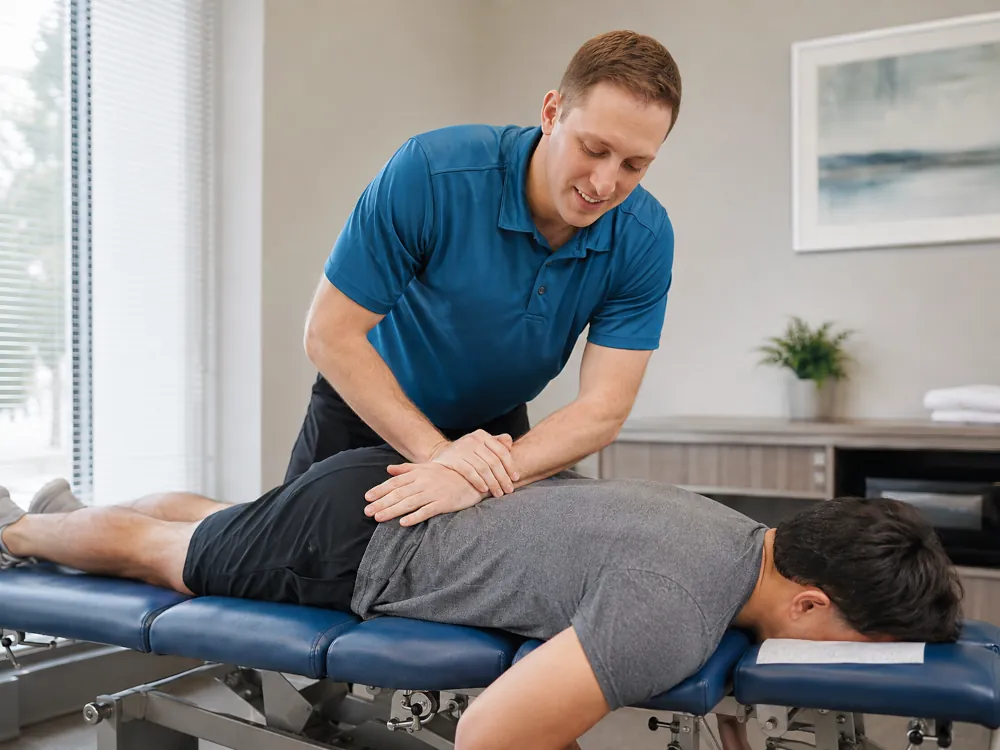
Low back pain can make everyday movements like sitting, standing, bending, lifting, walking, or getting out of bed uncomfortable.

For some people, symptoms begin suddenly after an injury or awkward movement. For others, discomfort develops gradually from prolonged sitting, repetitive activity, physical work, or changes affecting the muscles and joints of the lower back.

At Clearwater Chiropractic, Dr. Flood and Dr. Kelbel provide personalized low back pain care for patients in Eau Claire and the surrounding communities. Your visit begins with an evaluation of your symptoms, movement, health history, and daily activities so we can better understand what may be contributing to your discomfort and recommend care based on your individual needs.
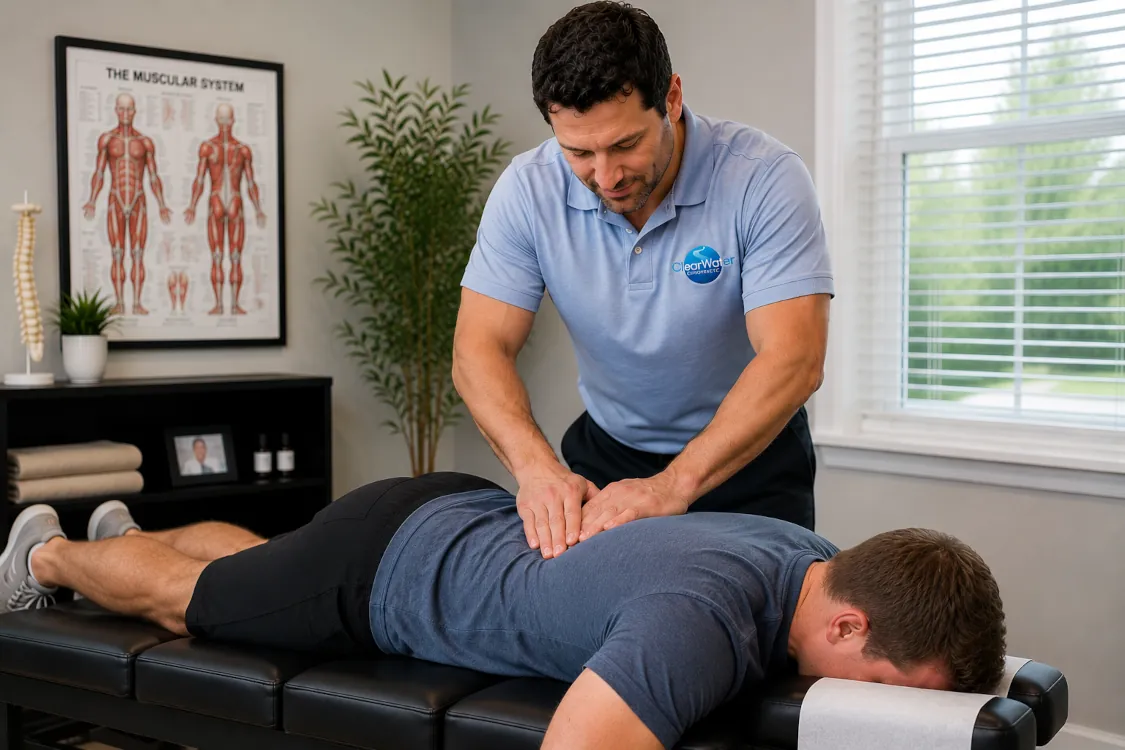
Dr. Flood performing a chiropractic adjustment for low back pain relief at Clearwater Chiropractic in Eau Claire, WI

Chiropractor. Dr. Flood evaluates a patient’s lower back to identify areas of discomfort, restricted movement, muscle tension, and other factors that may be contributing to low back pain.

What Is Low Back Pain?

Low back pain refers to discomfort affecting the lumbar region of the spine, generally between the bottom of the rib cage and the pelvis. This area supports much of the body’s weight and plays an important role in bending, twisting, lifting, walking, sitting, and maintaining an upright posture.

Because the lower back is involved in so many everyday movements, discomfort can develop for many different reasons. Some cases follow a specific injury, while others develop gradually due to repetitive movement, prolonged sitting, muscle tension, joint restriction, or age-related changes.

Low back pain can also feel very different from one person to another. One patient may experience a dull ache after sitting for several hours, while another may notice sharp discomfort when bending, lifting, standing, or changing positions.

Low back pain is one specific form of a much broader category of back pain. Understanding exactly where your symptoms occur and what movements affect them can help your chiropractor determine the most appropriate next steps.

Acute Low Back Pain

Acute low back pain often develops suddenly and lasts for a relatively short period. It may occur after lifting something heavy, twisting unexpectedly, slipping or falling, participating in sports, or performing unfamiliar physical activity. Even when symptoms appear after a specific event, the amount of discomfort and limitation can vary considerably.

Chronic or Recurring Low Back Pain

Some patients deal with symptoms that persist or repeatedly return over time. Recurring low back discomfort may be influenced by previous injuries, repetitive movements, prolonged sitting, physical job demands, reduced mobility, or other underlying factors. Rather than focusing only on where you hurt, our chiropractors evaluate how the lower back moves and how your symptoms relate to your everyday activities.

Office worker experiencing lower back pain while sitting at his desk

Prolonged sitting and poor workplace ergonomics can contribute to recurring back pain and reduced mobility.

How Low Back Pain Can Affect Everyday Life

Even relatively simple tasks can become frustrating when your lower back hurts.

Patients commonly tell us that low back pain affects their ability to:

  • Sit comfortably at work
  • Drive for extended periods
  • Stand in one place
  • Bend to put on shoes
  • Lift children or groceries
  • Sleep comfortably
  • Perform household chores
  • Exercise or participate in sports
  • Complete physically demanding job duties
  • Travel or enjoy recreational activities

The goal of treatment is not simply to focus on a pain score. We also want to understand what your symptoms are preventing you from doing. For one person, that goal may be getting through a workday comfortably. For someone else, it might be returning to the gym, playing with their children, golfing, working outdoors, or sleeping through the night. Those individual goals help guide your treatment plan.

Common Symptoms of Low Back Pain

Low back pain does not always feel like a single sharp pain in the center of the spine. Symptoms can involve the muscles, joints, surrounding tissues, hips, or nearby areas.

Dull or Aching Pain

A persistent ache across the lower back is common, particularly after prolonged sitting, standing, physical work, or repetitive movement. Some patients notice the discomfort gradually increases throughout the day and improves after changing position or resting.

Sharp Pain With Certain Movements

Bending forward, twisting, lifting, standing from a chair, rolling over in bed, or getting in and out of a vehicle may trigger sharper discomfort. Identifying which movements reproduce your symptoms can provide useful information during your chiropractic evaluation.

Lower Back Stiffness

The lower back may feel tight or difficult to move, particularly after waking up, sitting for extended periods, or remaining in one position. Stiffness can make ordinary tasks like putting on shoes, bending to pick something up, or getting out of bed more challenging.

Muscle Tightness or Spasms

Muscles surrounding the lower back may become tight, tender, or irritated. Some patients experience muscle spasms that make movement temporarily difficult. When significant muscle tension contributes to your symptoms, treatments such as soft-tissue techniques or dry needling may be considered as part of your care plan when appropriate.

Pain Into the Buttock or Leg

Some lower back problems can produce discomfort that extends beyond the lumbar region. Pain, burning, tingling, numbness, or weakness traveling into the buttock or down the leg can sometimes indicate nerve involvement. These symptoms are commonly associated with conditions such as sciatica and deserve a more specific evaluation.

Common Causes of Low Back Pain

There is not one universal cause of low back pain. Similar symptoms can develop from different structures or movement patterns, which is why an evaluation is important before determining a treatment approach.

Muscle Strains and Overuse

Lifting, carrying, repetitive bending, sudden movement, strenuous exercise, or performing activities your body is not accustomed to can strain the muscles and soft tissues surrounding the lower back.

Sometimes the triggering activity is obvious. In other cases, discomfort develops gradually after repeated physical stress.

Prolonged Sitting and Poor Positioning

Many people spend several hours each day sitting at a desk, driving, or working at a computer. Remaining in one position for extended periods can contribute to stiffness and muscle fatigue, particularly when movement throughout the day is limited.

Low back discomfort associated with sitting does not necessarily mean there is one “bad posture.” Frequently changing positions and maintaining regular movement can also be important.

Repetitive Bending, Lifting, and Physical Work

Jobs involving lifting, carrying, bending, twisting, climbing, or repetitive movements place additional demands on the lumbar spine and surrounding muscles.  A single event can cause symptoms, but discomfort may also develop gradually after weeks, months, or years of repetitive physical stress.

Patients whose symptoms are directly associated with their job may also benefit from learning more about our work-related injury care.

Sports and Exercise Injuries

Running, weight training, hockey, golf, recreational sports, and other physical activities can place considerable forces through the lower back. Low back pain may develop from a sudden injury, repetitive movement, changes in training volume, or inadequate recovery.

Joint and Disc-Related Changes

The joints and discs of the lumbar spine can change over time or become irritated following an injury. Not every disc or joint change causes pain, and imaging findings alone do not always explain a patient’s symptoms. Your chiropractor will consider your examination findings together with how you feel and move.

Motor Vehicle Accidents

A collision can place sudden forces through the spine, pelvis, muscles, and surrounding tissues. While whiplash is commonly associated with the neck, car accidents can also produce lower back symptoms. Patients experiencing discomfort following a collision should have their symptoms properly evaluated.

How Clearwater Chiropractic Approaches Low Back Pain Treatment

There is no single chiropractic technique or treatment schedule that is appropriate for every person with low back pain. Dr. Flood and Dr. Kelbel begin by evaluating your individual situation and then recommend care based on what they find.

A Personalized Chiropractic Evaluation

Your chiropractor will ask when the pain began, where you feel it, which movements make it better or worse, and whether you have experienced similar symptoms before.

Your evaluation may also include assessment of:

  • Posture
  • Lumbar movement
  • Range of motion
  • Hip movement
  • Muscle tension
  • Joint mobility
  • Strength or movement patterns
  • Activities that reproduce your symptoms

The goal is to develop a better understanding of what may be contributing to the problem before recommending treatment.

Learn more about Dr. Flood and Dr. Kelbel and the approach they take to chiropractic care.
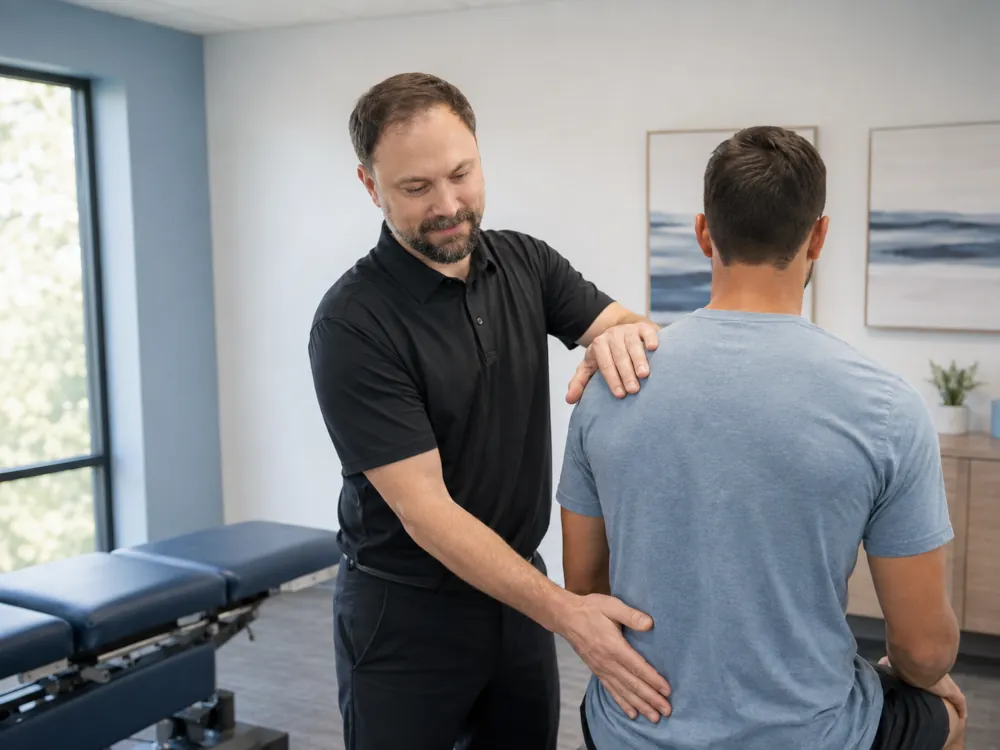
Dr. Flood evaluating a patient’s posture and upper back movement

Dr. Flood evaluates each patient’s posture, mobility, and spinal function before recommending a personalized approach to back pain care.

Dr. Kelbel performing a chiropractic adjustment for a patient with back pain

Dr. Kelbel provides personalized chiropractic adjustments designed to improve joint movement, mobility, and everyday function.

Chiropractic Adjustments

Chiropractic adjustments may be used to address areas of restricted joint movement when appropriate. The technique and amount of force used can vary based on the patient’s condition, examination findings, previous experience, and comfort level. Treatment is not identical for every patient, and recommendations may change as mobility and symptoms improve.

Soft-Tissue and Muscle Treatment

Low back discomfort often involves more than the spinal joints alone. Tight or irritated muscles around the lumbar spine, hips, pelvis, and surrounding areas may also contribute to symptoms. Soft-tissue techniques may therefore be incorporated into treatment when appropriate.

Dry Needling for Muscle Tension

When sensitive or tight muscle tissue is contributing to discomfort or limited movement, dry needling may be recommended.

Clearwater Chiropractic offers dry needling for $45 per region. It may be used independently or alongside chiropractic treatment depending on your symptoms and treatment goals.

Movement and Home-Care Recommendations

Your chiropractor may also recommend changes or activities outside the clinic. These may include mobility exercises, stretches, movement breaks, activity modifications, or recommendations related to lifting and workplace habits.

The purpose is to help you remain active and support the progress being made during treatment.

Comprehensive chiropractic solutions tailored to your lifestyle & goals.

Low Back Pain vs. Sciatica

Low back pain and sciatica are related, but they are not the same thing. Low back pain primarily describes discomfort located in the lumbar region. Sciatica generally refers to symptoms associated with irritation of the sciatic nerve or related nerve roots.

Sciatica symptoms may include:

  • Pain traveling through the buttock
  • Pain extending down one leg
  • Burning sensations
  • Tingling
  • Numbness
  • Leg weakness in some cases

You can have low back pain without sciatica, and some people experience significant leg symptoms with relatively little lower back discomfort. Because nerve-related symptoms may require a different evaluation and treatment approach, be sure to tell your chiropractor if your symptoms extend into the buttocks or legs.

When Should You Have Low Back Pain Evaluated?

An occasional mild ache after unusual activity may improve on its own. However, an evaluation may be appropriate when low back pain:

  • Continues longer than expected
  • Frequently returns
  • Is becoming progressively worse
  • Limits your ability to work or exercise
  • Interferes with sleep
  • Makes sitting or standing difficult
  • Began after a fall or accident
  • Developed after lifting or another injury
  • Is accompanied by symptoms traveling into the leg

You do not need to know exactly what is causing the discomfort before scheduling an appointment. Identifying possible contributing factors is part of the evaluation process.

What to Expect at Your First Back Pain Appointment

Your first appointment begins with a conversation about your symptoms and how they affect your everyday life.

1. Discuss Your Symptoms and History

Dr. Flood or Dr. Kelbel will ask when your symptoms began, what you were doing when they started, where you feel the discomfort, and which movements or positions affect it. Previous injuries, work demands, exercise habits, and prior treatments may also be discussed.

2. Evaluate Your Movement

Your chiropractor may evaluate the way your lower back, pelvis, hips, and surrounding areas move. Certain movements may be used to better understand which activities reproduce or relieve your symptoms.

3. Review the Findings

After the evaluation, your chiropractor will explain what was found and answer your questions. If chiropractic treatment is appropriate, you will discuss the available options and an initial plan based on your condition and goals.

4. Monitor Your Progress

Your response to treatment provides additional information. Your care plan can be adjusted as symptoms, mobility, and function change rather than automatically following the same schedule regardless of your progress.

Why Choose Clearwater Chiropractic for Low Back Pain Care?

Clearwater Chiropractic provides personalized low back pain care based on your symptoms, examination findings, comfort level, and goals. Dr. Flood and Dr. Kelbel use a combination of chiropractic adjustments, soft-tissue techniques, dry needling when appropriate, and practical movement recommendations to help patients improve mobility and return to everyday activities with greater comfort.

Personalized Treatment

Care is based on your symptoms, examination findings, health history, comfort level, and personal goals rather than a one-size-fits-all treatment plan.

Two Experienced Chiropractors

Patients have access to both Dr. Flood and Dr. Kelbel, allowing Clearwater Chiropractic to provide individualized chiropractic care for a variety of musculoskeletal conditions and injuries.

Multiple Treatment Options

Depending on your needs, treatment may include chiropractic adjustments, soft-tissue techniques, dry needling, mobility recommendations, and guidance for activities outside the office.

Convenient Eau Claire Location

Clearwater Chiropractic provides chiropractic care for patients throughout Eau Claire and surrounding Chippewa Valley communities.

Frequently Asked Questions About Low Back Pain

Chiropractic care may be appropriate for certain types of low back pain. Your chiropractor will first evaluate your symptoms, health history, movement, and examination findings to determine whether chiropractic treatment is appropriate for your condition.

There is no single timeline that applies to everyone. Consider scheduling an evaluation when symptoms are significant, persist longer than expected, repeatedly return, limit normal activities, or begin following an injury.

Long periods of uninterrupted sitting can contribute to stiffness and discomfort for some people. Rather than focusing on one perfect sitting position, regularly changing positions and incorporating movement throughout the day may be helpful.

Whether a particular exercise is appropriate depends on the cause and severity of your symptoms. Some movement may be beneficial, while certain activities may temporarily aggravate an injury. Your chiropractor can provide recommendations based on your individual evaluation.

Certain conditions affecting the lower back can also produce pain, tingling, burning, or numbness extending into the buttock or leg. These symptoms may indicate nerve involvement, including conditions such as sciatica, and should be discussed during your evaluation.

Dry needling may be considered when muscle tension or trigger points contribute to pain or restricted movement. Clearwater Chiropractic offers dry needling for $45 per region when it is appropriate for the patient’s condition.

Seek prompt medical evaluation for low back pain accompanied by loss of bladder or bowel control, difficulty urinating, significant or worsening leg weakness or numbness, fever, unexplained weight loss, or severe symptoms following a significant injury.

Take the Next Step Toward Improving Your Low Back Pain

Low back pain can interfere with work, sleep, exercise, family activities, and many of the movements you perform every day. Understanding what may be contributing to your discomfort is an important first step toward determining the appropriate care.

At Clearwater Chiropractic, Dr. Flood and Dr. Kelbel provide personalized evaluations and chiropractic care for patients experiencing low back pain in Eau Claire and surrounding communities.

Whether your symptoms began recently or have repeatedly returned, our chiropractors can evaluate your condition, explain their findings, and help you determine the appropriate next steps.

Prefer to call? (715) 831-2111